Missing teeth change more than your appearance — they alter how you chew, speak, and how your facial structure is supported. Many adults experience tooth loss for reasons ranging from decay and gum disease to injury or congenital absence. Fortunately, implant dentistry offers a predictable way to restore both function and confidence while preserving the surrounding oral structures.
Dental implants are designed to become a stable foundation for replacement teeth. Unlike removable options, implants fuse with the jawbone and act like natural tooth roots, giving replacement crowns, bridges, or dentures a level of stability that closely resembles real teeth. This stability often makes day-to-day activities—eating, speaking, smiling—feel natural again.
At Perfect Smile Dental Studio, our approach begins with careful evaluation and clear communication. We take time to explain the implant process, discuss your goals, and map out a custom plan that balances long-term oral health with the aesthetic results you want to achieve.
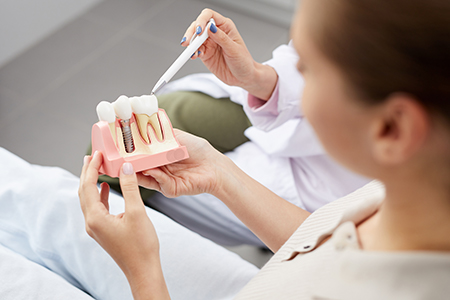
Implants are unique because they address the missing root as well as the missing tooth. That root-like function helps transfer chewing forces to the jawbone in a manner similar to natural teeth, which keeps the bone stimulated and helps preserve facial contours over time. For many patients, this translates into a more youthful profile and better long-term support for neighboring teeth.
From a user-experience standpoint, implant-supported restorations typically feel more secure and require fewer day-to-day adjustments than traditional removable dentures. Patients report greater confidence when speaking and smiling because the restorations are fixed or firmly retained to anchored posts in the jaw.
Because implants can support a single crown, a multi-unit bridge, or a full arch, they are exceptionally versatile. They allow clinicians to replace missing teeth without altering healthy adjacent teeth, which preserves more of your natural smile for the future.
Dental implants are crafted from biocompatible materials and placed into the jawbone where a tooth root once was. Over a period of months the bone grows around the implant — a natural bonding process that secures the post and creates a solid base for the final restoration. This process is called osseointegration and is central to the long-term reliability of implant therapy.
The final restoration — whether a crown, bridge, or denture — is designed to fit precisely and harmonize with the surrounding teeth in shape and color. Advanced imaging and digital planning help ensure accurate placement and predictable outcomes, minimizing surprises and shortening the overall treatment timeline when appropriate.
Treatment is staged to protect healing and to let us assess progress at key milestones. In many cases, a temporary restoration can be used during healing so patients don’t have to go without teeth while the implant integrates.
One of the most appreciated advantages of implant therapy is its ability to restore everyday function. With well-placed implants, patients can enjoy a broader range of foods and a more natural bite force. This makes eating nutritious meals easier and helps maintain quality of life.
Implants are also a long-term solution when cared for properly. Unlike restorations that rely on adjacent teeth for support, implants stand independently, reducing the need to alter healthy teeth and offering greater preservation of the natural dentition.
Another important benefit is maintenance of the jawbone. Implants stimulate the surrounding bone, which helps slow the bone loss that typically follows tooth extraction. That preservation of bone contributes to facial support and a more stable foundation for future dental work.
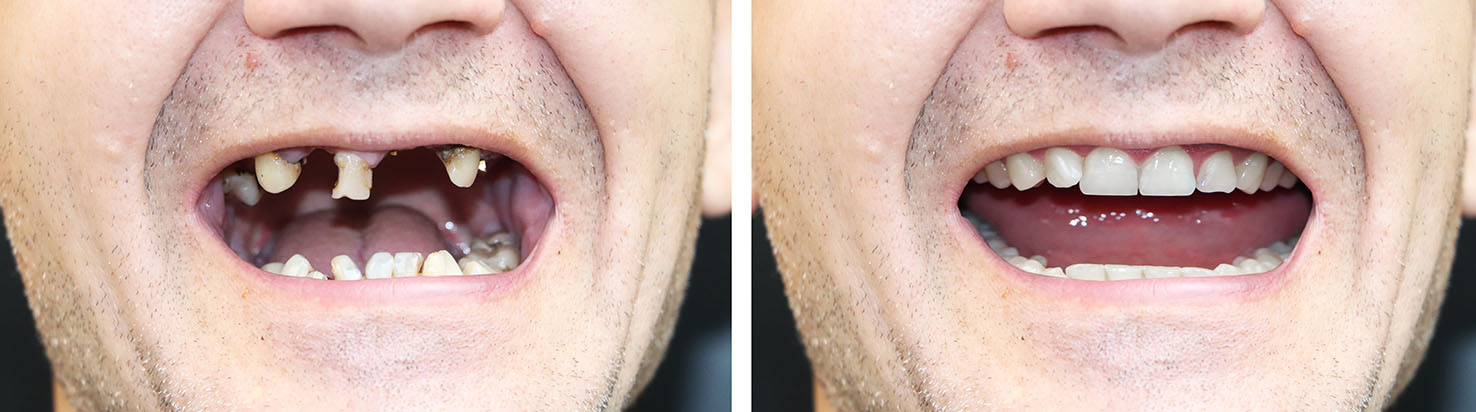
When one tooth is missing, an implant topped with a custom crown restores both function and appearance without touching neighboring teeth. The crown is shaped and shaded to blend with the adjacent teeth, creating a seamless result that looks and performs like a natural tooth.
For two or more missing teeth in a row, implant-supported bridges provide a stable solution that avoids placing crowns on healthy adjacent teeth. Strategically positioned implants carry the load for the entire span, maintaining bone in the area and providing a durable, natural-feeling restoration.
Patients who need a complete upper or lower replacement benefit from full-arch implant solutions. Using a limited number of implants placed at optimal locations, clinicians can support a fixed prosthesis that feels and functions like natural teeth. These designs eliminate the need for adhesives and removable appliances in many cases.
For patients who prefer a removable option, implant-retained dentures offer increased retention and comfort compared with traditional dentures. Small attachments on the implants lock the denture into place during function and can be detached for cleaning, balancing convenience and security.
Making a candidacy decision starts with a thorough clinical exam and imaging. We evaluate bone quality and quantity, gum health, overall medical history, and lifestyle factors. Conditions such as uncontrolled systemic disease or certain habits may affect timing and planning, but many people can become candidates with appropriate preparatory care.
When bone volume is insufficient, grafting or site development can create a stable foundation for implant placement. These preparatory steps are common and are planned carefully so that the final implant can be placed with confidence and predictability.
Every treatment plan is tailored. Your dental and medical histories, aesthetic goals, and daily routine will guide which implant solution is most appropriate. Our team focuses on realistic, individualized recommendations rather than one-size-fits-all answers.
Implant placement is typically performed as an outpatient procedure with local anesthesia and, when appropriate, sedation options to ensure comfort. The surgery itself is focused and precise: the implant is placed in the jaw, and the area is protected while healing begins.
After placement, there is a period of healing while the implant integrates with the bone. During this phase, some patients receive temporary restorations so they can function and socialize without interruption. Healing times vary according to the implant site, bone quality, and individual biology.
Follow-up care includes scheduled visits to monitor healing, instructions for at-home care, and eventual placement of the final prosthesis once integration is confirmed. Good communication and adherence to post-operative guidance help support optimal outcomes.
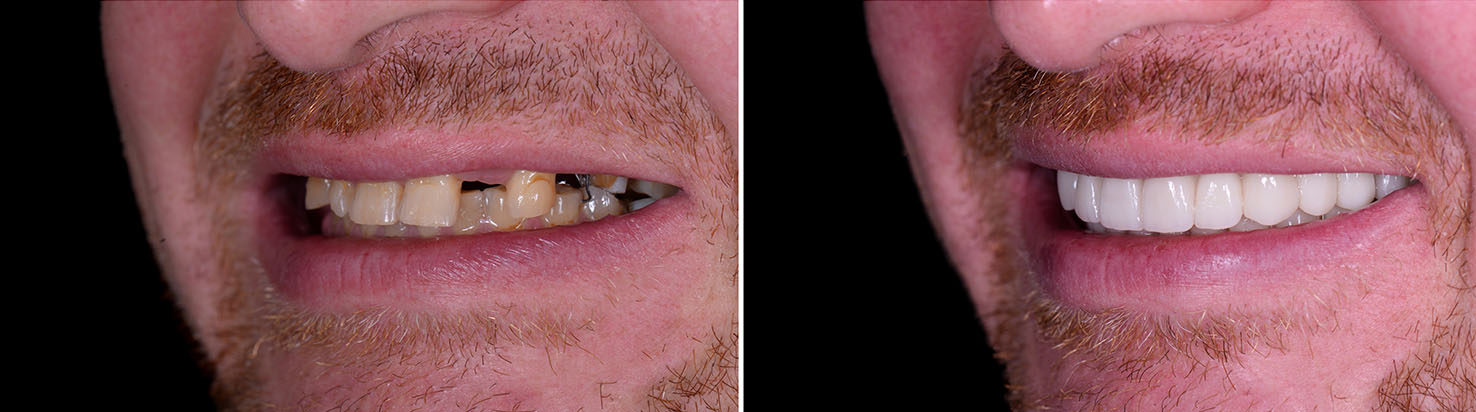
Bone loss is a common consequence of missing teeth. In areas where bone volume has diminished, grafting or ridge augmentation can rebuild the site to accept an implant. These procedures use natural or synthetic materials to encourage new bone growth and create a stable foundation for implant placement.
Grafting is a routine part of modern implant dentistry and can often be performed at the time of extraction or as a staged procedure before implant placement. The decision to graft is made on clinical grounds and tailored to the timing and final restorative plan.
Careful planning, often using 3D imaging, allows clinicians to anticipate grafting needs and sequence treatment so patients move through each phase efficiently and with predictable results.
Implant dentistry combines modern materials, digital planning, and surgical precision to provide reliable solutions for missing teeth. Whether you need a single crown or a full-arch restoration, implant therapy is designed to restore comfort, function, and confidence while protecting the health of surrounding teeth and bone.
If you’d like to learn more about how implant dentistry could work for you, please contact us for additional information or to arrange a consultation. Our team is ready to answer questions and help you explore the best options for rebuilding a healthy, natural-looking smile.
If you've lost a tooth due to injury, decay, gum disease, or any other reason, we recommend dental implants to replace missing teeth. Dental implants come the closest to replicating the look, feel, and function of your natural teeth.
Dental implants are placed into the jawbone and mirror the same function as the root of a tooth. The procedure for dental implants is usually performed while a patient is sedated. Patients who undergo IV sedation must have an empty stomach and transportation home following the procedure. Most sedation patients will have little to no memory of the procedure occurring.
Generally, dental implants are made out of a biocompatible metal such as titanium. Biocompatible metals are also used for other common bone implants (such as shoulder, hip, and knee replacements). The visible portion of the implant is usually made out of porcelain and is custom-made to match your existing teeth.
Dental implants are designed to fuse to the bone, which makes them become permanent fixtures. Typically speaking, the success rate is nearly 100%. There are few cases in which the implant will not fuse as intended and must be removed. If this happens to occur, the procedure can be attempted again a few months later.
Dental implants are not usually covered by dental insurance, but may be covered under a patient's medical insurance. Our office and your insurance company can discuss coverage options with you based on your individual case and treatment plan.
It's easy... just take care of an implant as if it's a natural tooth! This involves regular brushing, flossing, and dental checkups. If you have any concerns about your implant, contact us immediately.